18.1.1 addresses a few issues in the previous release, while also updating the packages and plugins. Most notably, a Python library change made intrusion detection rules fetch fail previously and we fixed GUI and backend behaviour for two special NAT cases.
We cover an interview about Unix Architecture Evolution, another vBSDcon trip report, how to teach an old Unix about backspace, new NUMA support coming to FreeBSD & stack pointer checking in OpenBSD.
Details of the 2018 campaign have been added to the Foundation's website. The goal for the year is for $300,000. The total for "smaller" donations has already taken the OpenBSD community to bronze level sponsorship! Please show your support by contributing.
We provide you with updates to Spectre & Meltdown from various BSD projects, a review of TrueOS from Linux, how to set up FreeBSD on ThinkPad x240 & a whole bunch of beastie bits.
As 18.1 is drawing near this stable update for the 17.7 series could be the last one. So whether there will be a hotfix to enable the update path or a full 17.7.13 remains to be seen, but we will keep you informed either way. The targeted release date for 18.1 is January 29.
For now we refrain from letting users upgrade directly to the release candidates, but suffice to say that with the development version accompanying this update it is possible from the console. And again thank you to all early adopters which have made the release candidates a thoroughly enjoyable experience.
We review Meltdown & Spectre responses from various BSD projects, show you how to run CentOS with bhyve, GhostBSD 11.1 is out & we look at the case against the fork syscall.
The commands rcp(1), rlogin(1), rlogind(1), rsh(1) and rshd(1) have been removed from DragonFly. There’s a net/bsdrcmds port if you still need them… though I imagine/hope ssh is filling the void for everyone.
A message to tech@ from Philip Guenther (guenther@) provides the first public information from developers regarding the OpenBSD response to the recently announced CPU vulnerabilities:
So, yes, we the OpenBSD developers are not totally asleep and a handful of
us are working out how to deal with Intel's fuck-up aka the Meltdown
attack. While we have the advantage of less complexity in this area (e.g.,
no 32bit-on-64bit compat), there's still a pile of details to work through
about what has to be *always* in the page tables vs what can/should/must be
hidden. Read it.
By now you’ve probably heard of the Meltdown/Spectre attacks. (background rumors, technical note) Matthew Dillon’s put together a Meltdown mitigation in DragonFly, done in four commits.
It’s turned off and on by the sysctl machdep.isolated_user_pmap – and defaults to on for Intel CPUs. Buildworld tests show about a 4-5% performance hit, but that’s only one form of activity, measured, so there will surely be other effects.
Note that Spectre is not mitigated by this commit series, and as I understand it, cannot be realistically fixed in software.
Update: Matthew Dillon posted a summary to users@.
The unveiling of the three new CPU bug classes, collected in the two brandbugs “Meltdown” and “Spectre”, has mostly shocked the BSDs; I’ve got it on some authority that even FreeBSD was not informed ahead of time, left alone the others. Thanks to laffer1 from MidnightBSD for a couple of heads-up warnings into our direction!
Here’s what I could gather until now (please do correct me if I’m wrong):
Meltdown is specific to Intel® CPUs with out-of-order execution, that is, all P6-class (Pentium Pro/MMX, Pentium Ⅱ, but not Pentium Ⅰ/MMX) or newer (except old Atom) CPUs. It appears to allow user processes to read kernel memory, but not across VMs, nor to attack a hypervisor. A variant for ARM exists but AMD’s x86 CPUs are supposedly safe. The KAISER/FUCKWIT/UASS/KPTI patches for Linux fix this, at huge performance cost on x86, not so much on ARM, and no cost for unaffected CPU models (runtime detected).
Spectre affects x86, ARM, POWER CPUs and possibly others. I’ve not yet found information on whether it is also limited to CPUs with out-of-order executions, but it seems likely. SPARC CPUs might be safe; Solaris/SPARC64 is safe due to the way its memory addressing works. If the OOO execution assumption is true, 80486 and P5 class x86 CPUs are also safe. This one does allow cross-VM and hypervisor attacks, so if the bare metal CPU is vulnerable, SOL. There does not yet seem to be a generic fix; some hint at having to patch the compiler and recompile everything with a workaround that has a performance cost, even if the CPU is not affected, or was fixed with a microcode update. AMD’s x86 CPUs are partially hit, one of the variants does not work on them.
“CERT recommends throwing away your CPU and buying an non-vulnerable one” (thanks to El Reg), but nobody states which CPUs are not vulnerable.
At the present time, we suggest any MirBSD/i386 instances that run on any CPU other than an 80486 or P5-class (Pentium Ⅰ or a non-PPro MMX) to be restricted to single user or trusted user access only, and no untrusted software including ECMAscript to be run on them.
Watch this space for updates. Oh, and, if you know what you’re (and I’m) talking about, please, again, do provide me with information necessary to provide those updates, both to MirBSD and to this space.
FreeBSD was made aware of the problems in late December 2017. We're working with CPU vendors and the published papers on these attacks to mitigate them on FreeBSD. Due to the fundamental nature of the attacks, no estimate is yet available for the publication date of patches.
We've just published our goals for 2018. We've got a number of new goals planned, some that require new infrastructure. In 2018, we plan to migrate at least 90% of our infrastructure to a single data center in addition to expanding out existing infrastructure.
More user group news: Helsinki, Finland, has a new BSD User Group: HelBUG. First meeting is February 7th. There’s no mailing list/site that I know of, yet.
We walk through dumping a PS4 kernel in only 6 days, tell you the news that NetBSD 7.1.1 has been released, details on how to run FreeBSD on a Thinkpad T470 & there’s progress in OpenBSD’s pledge.
DragonFly 5.0.2 is released. As you may guess from the version number, this is a bugfix release. The release tag has the full details. Update through the normal process of a buildworld/buildkernel, at your leisure.
XSS vulnerability in the certificate manager is being fixed that is based on a crafted certificate being imported into the system. PHP was finally updated from 7.0 to 7.1 which should make things a bit faster. Last but not least, the HAProxy plugin by Frank Wall receives a major update for improved usability, several new features and two bug fixes.
Picking a compiler for debuggability, how to port Rust apps to FreeBSD, what the point of Docker is on FreeBSD/Solaris, another EuroBSDcon recap & network manager control in OpenBSD.
Highlights:
- fixed syslogd - restore host name handling in UDP case
- fixed ARM64 control flow problem
- fixed MAP_GUARRD issues
- upgrade to Unicode 10.0.0
- ZFS fixes
(side note: the recent OpenSSL security issues (FreeBSD-SA-17:11.openssl) are already fixed in previous releases) Download
If you’re booting DragonFly in UEFI mode, and you have unsupported video (i.e. NVIDIA), there’s the scfb driver for xorg. It doesn’t support NVIDIA chipsets either, but it gives more options than the generic vesa driver. It appears to be present in all the BSDs to some extent.
A shiny new update is available, addressing the recent security advisories from FreeBSD, OpenSSL, Sudo and a number of minor bugs.
To all our 18.1-BETA testers we say this: thank you! The results have been thoroughly positive. If you would like to participate as well, please take a closer look:
https://forum.opnsense.org/index.php?topic=6257.0
pfSense software version 2.4.2 is a maintenance release bringing security patches and stability fixes for issues present in previous pfSense 2.4.x branch releases.
I just wasted an hour trying to figure out why xorg had strange output but no errors on this laptop, and it’s because I had i915_load=”YES” in /boot/loader.conf instead of i915_load=”YES” in /etc/rc.conf. I’m almost nearly sure I’ve mentioned that before, but if not: here you go.
(though if you never plan to run X, you can put it in loader.conf and everything will just work.)
If you happen to be running an old version of DragonFly, you may need to do an intermediate upgrade to move to releases after 5.0. This is in part because of commits to support C++14. This only applies to version of DragonFly before 4.4.
Tthis is a security update and reinstallation of pkgs/ports are required due LibreSSL upgrade!
Highlights:
- Changed AT_PAXFLAG auxvector position (4c04e4a613679510cd16bb13d7974c18e3f54460)
- Properly bzero kldstat structure to prevent kernel information leak. (3ff3ec467d4eb11cdbf706cf386935d5e58c2e91) [FreeBSD-SA-17:10.kldstat, CVE-2017-1088]
- CloudABI 0.17 (cf6ac9b4efa43a9c64c5ab311666080a0e8632b1)
- MFH (r325010): don't bother verifying a password that we know is too long. (b242fe393914310e50673eb62d480ce03706d745) [CVE-2016-6210] Installer
We have a first PS4 kernel exploit, the long awaited OpenZFS devsummit report by Allan, DragonflyBSD 5.0 is out, we show you vmadm to manage jails, parallel processing with Unix tools & more!
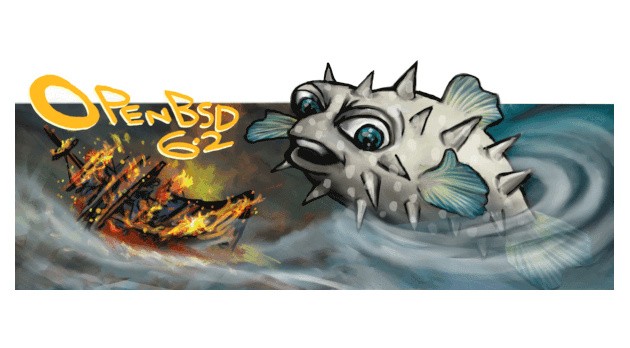
So, again this release the tradition of making Theo do art has continued! Up for sale by auction to the highest bidder on Ebay is the only OpenBSD 6.2 CD set to be produced. The case and CD's feature the 6.2 artwork, custom drawn ans signed by Theo. All proceeds to support OpenBSD Go have a look at the auction
As with previous OpenBSD auctions, if you are not the successful bidder, we would like to encourage you to donate the equivalent of you highest bid to the project.
Bsdstats is included as in DesktopBSD-1.7 Release, so DesktopBSD will be counted in www.bsdstats.org.
Bsdstats
can be launched or is launched from console using bsdstats.send, via
rc.conf or via cron from
/usr/local/etc/poeriodic/monthly/300.statistics.
We have included tools to:
Connect to desktopbsd irc channel to get help using desktopbsd-irc
Open bugtracker page in forums using desktopbsd-bug-report
Get system information using inxi scripts ported from linux
Inxi can be run from console, terminal and even under irc client to send informations in irc channel directly.
desktopbsd-irc plus inxi are great tools to help users in #desktopbsd channel.
ISOs are installable using gbi (GhostBSD Installer) and includes another GhostBSD tools.
Please notice that Eric Turgeon ( GhostBSD founder and developer ) is also in our's dev team.
Please test and send bugs using desktopbsd-bug-report to be able to fix them.
To
enable desktop icons on desktop please run dconf-editor and go to
org.gnome.desktop.background and check show-desktop-icons. (desktop
icons are not enabled by default due to a gnome bug)
We'll use for support www.desktopbsd.weebly.com website, desktopbsd.boards.net forum and #desktopbsd irc channel on irc.freenode.server.
After a year of development, testing and debugging we are pleased to
announce the release of GhostBSD 10.3 MATE & XFCE which is available
on SourceForge and torrents for the amd64 and i386 architectures.
What's new in GhostBSD 10.3
ZFS support
UEFI support
Installer custom partition creation subjection
VirtualBox support get setup at boot time if needed.
4k partition alignment by default
GhostBSD Software will be updated Quarterly which will bring more
stability to GhostBSD still user will be able to change it to latest to
have the latest software update.
What changed in GhostBSD 10.3
The installer partition editor UI and partitioning have been improved
VirtualBox additions would be uninstall after installer if it is not runnig in a VirtualBox
Slim is replacing GDM.
Networkmgr display the full SSID
Replaced the HTML/CSS installation slide with a GTK/CSS the slide.
What has been fix.
Networkmgr SSID list
VirtualBox supports
Installer MBR partition issue
Some installer text error
Keyboard layout after installation with MATE
Network Manager slowness to open the menu
Network Manager icon tray crash
Localtime time as been fix
Fix boot partition for GPT to supports freebsd-boot, bios-boot and efi
System Update duplicating the whole install under /boot/kernel.old
September 1st, 2016: The OpenBSD team announces the availability of 6.0!
We are pleased to announce the official release of OpenBSD 6.0.
This is our 40th release on CD-ROM (and 41st via FTP/HTTP).  We remain
proud of OpenBSD's record of more than twenty years with only two remote
holes in the default install.

As in our previous releases, 6.0 provides significant improvements,
including new features, in nearly all areas of the system:
This week on BSDNow, we have an interview with Richard Yao, who
will be telling us about the experience & challenges of porting ZFS
to Linux. That plus the latest news & feedback is coming your way,
on your place to B….SD!
The second RC build for the FreeBSD 11.0 release
cycle is now available. ISO images for the amd64, armv6,
i386, aarch64, powerpc, powerpc64 and sparc64
architectures are available
on most of our FreeBSD
mirror sites.
pfSense® software version 2.4 pre-alpha snapshots are now available.
pfSense 2.4 will use FreeBSD 11 as a base, and 11.0-RELEASE has not
yet occurred. There will be additional work to use 11.0-RELEASE as a
base.
More work at “reduction of technical debt” is occurring in 2.4. We
have decided to not carry forward the kernel patches for Captive Portal.
Instead, it is being re-written to use stock IPFW. That work is only
about 75% complete. Simultaneously, work is occurring to convert
several subsystems (e.g. radius) to use the PEAR equivalents:
We now use pear-XML_RPC2. As a result of the rework, you can now
set a username field in HA settings to connect to the other HA partner.
Previously this was always ‘admin’. The previous xmlrpc, inc,
xmprpc_client.inc and xmprpc_server.inc have been removed.
There appears to be a bug in pf (likely due to the interaction of one of our patches). This only manifests under high usage. New features and changes are listed here.
Full change list:
* source and build tools
* ports
* FreeBSD source
Outstanding bugs/features/todo items:
* Everything else
We advise that you do not use this on a production system yet. If you
have the time and interest, we encourage you to try this on a scratch
system or VM and provide feedback for any issues you find.
This week on BSDNow, Allan is back from his UK trip & we’ll
get to hear his thoughts on the developer summit. That plus all the
latest news & an interview with Drew Gurkowski discussing tutorial
writing for FreeBSD. Keep it tuned to your place to B...SD!
This week on BSDNow, Allan is away in the UK for BSDCam, but we
still have a full episode for you! Don’t miss our interview with Myke
Geiger talking about using FreeBSD in the ISP environment & the
latest news, here on your place to B...SD!
This first RC release is ready for testing new
feature in GhostBSD 10.3, MATE and XFCE is available on SourceForge for
the i386, amd64, and amd64-uefi architectures.
The OPNsense project is growing rapidly and it’s with great pleasure that the OPNsense core team
may announce that our team will be strengthened with Shawn Webb. Shawn
has already been doing lots of great work and his formal membership is
seen as a logical step forward by all of us.
Shawn Webb
Over the past year, I have had the wonderful experience of working
with the OPNsense core team in porting over HardenedBSD’s robust ASLR
implementation. It is with pleasure and humility that I have accepted
their invitation to join the core team. My overarching goal will be to
port the main features of HardenedBSD to OPNsense.
Address Space Layout Randomization, or ASLR for short, is an exploit
mitigation technology that aims to make certain kinds of vulnerabilities
harder to successfully exploit. In order to fully apply ASLR,
applications must be compiled as a Position-Independent Executable
(PIE). In the short term, my next goal is to enable PIE fully across
OPNsense’s ports tree. I’m using HardenedBSD’s ports tree and package
building infrastructure as a test bed prior to importing into OPNsense.
OPNsense is investigating migrating to 11.0-RELEASE for its 17.1
release. The Virtual Memory (VM) subsystem has changed drastically
between FreeBSD 10 and FreeBSD 11. Since ASLR deals with the VM
subsystem, extreme care must be taken in the update of the codebase from
FreeBSD 10.3 to 11.0. I will assist in those efforts by freshly porting
over the ASLR implementation from HardenedBSD 11.0 to OPNsense’s
FreeBSD 11.0 codebase.
I look forward to being a part of the OPNsense core team. The
coordination between HardenedBSD and OPNsense will bring a more solid
foundation on which home users and enterprises alike can build secure and scalable networks.
The last bits of Linux emulation have been removed from DragonFly.
It’s 32-bit, so it’s been unsupported since DragonFly went to 64-bit
only with the 4.0 release. Also, some other 32-bit only items are gone,
including the cs, ep, ex, fe, and vx
network drivers. It’s almost impossible that anyone was using it, but
it’s notable because that’s some… 15-20k lines of code gone? Removal of
unused code is also positive.
This week on BSDNow, we are taking a look at a few different
tutorials, including running your very own RPi web-server. (Come-on, you
know you’ve thought of it). Plus we have a GhostBSD tutorial, a look at
a GitHub project to run Steam Linux on FreeBSD 11 & more!
You’ll want to stick-around for your place to B...SD!
We are happy to announce the release of pfSense® software version 2.3.2!
This is a maintenance release in the 2.3.x series, bringing a number of bug fixes. The full list of changes is on the 2.3.2 New Features and Changes page.
This release includes fixes for 60 bugs, 8 features and 2 todo items completed.
If you haven’t yet caught up on the changes in 2.3.x, check out the Features and Highlights video. Past blog posts have covered some of the changes, such as the performance improvements from tryforward, and the webGUI update.
As always, you can upgrade from any prior version directly to 2.3.2. The Upgrade Guide
covers everything you’ll need to know for upgrading in general. There
are a few areas where additional caution should be exercised with this
upgrade if upgrading from 2.2.x or an earlier release, all noted in the 2.3 Upgrade Guide.
For those upgrading from a 2.3 beta or RC version who have not yet upgraded to 2.3-RELEASE, please see this post.
While, nearly all of the common regressions between 2.2.6 and
2.3-RELEASE have been fixed in subsequent releases, the following still
exist:
IPsec IPComp does not work. This is disabled by default. However in
2.3.1, it is automatically not enabled to avoid encountering this
problem. Bug 6167
IGMP Proxy does not work with VLAN interfaces, and possibly other edge cases. Bug 6099. This is a little-used component. If you’re not sure what it is, you’re not using it.
Those using IPsec and OpenBGPD may have non-functional IPsec unless OpenBGPD is removed. Bug 6223
Compared to pfSense 2.2.x, the list of available packages in pfSense
2.3.x has been significantly trimmed. We have removed packages that
have been deprecated upstream, no longer have an active maintainer, or
were never stable. A few have yet to be converted for Bootstrap and may
return if converted. See the 2.3 Removed Packages list for details. pfSense 2.3.2 does bring back ntopng, and the vnstat (traffic totals) package is new.
Downloads are available on the mirrors as usual. Downloads for New Installs and Upgrades to Existing Systems –
note it’s usually easier to just use the auto-update functionality, in
which case you don’t need to download anything from here. Check the Firmware Updates page for details.
The development of the upcoming major version of FreeBSD, whose final release is scheduled for early September, continues at a fast pace. Although delayed by a week, the 11.0-BETA2 build was finally announced yesterday: "The
second BETA build of the 11.0-RELEASE release cycle is now available. A
summary of changes since 11.0-BETA1 includes: several build- and
toolchain-related fixes; WITNESS and INVARIANTS have been disabled on
powerpc, powerpc64, arm and armv6 architectures; freebsd-update(8) has
been updated to allow '*-dbg' distribution sets; ctld(8) no longer exits
when reloading the configuration with invalid initiator-portal clauses;
GENERIC-NODEBUG kernel configurations have been removed; the callout
code has been updated to avoid a system panic with TCP timers; several
other changes." See also the (incomplete) release notes which are still work-in-progress. Quick links to download the amd64 and i386 installation DVD images: FreeBSD-11.0-BETA2-amd64-dvd1.iso (2,479MB, SHA512), FreeBSD-11.0-BETA2-i386-dvd1.iso (2,203MB, SHA512).
A new iso is available for testing for 64bit. Currently there
are two install media, one for DVD/CD and one for USB devices. Be sure
to select the right media. Dot img for usb and dot iso for CD/DVD. Download is available here
Currently the main packages available for testing are: LXDE,
chromium, Xorg, wine, transmission and a few Window Managers. New
Packages are added daily and more DE should be available in a few days.
xfce4, firefox and vlc will be next uploaded. Though there are multiple PKGBUILD for these already available at Github
Also you can view daily reports of the repository, which includes
broken packages, packages which fail to pull in dependencies, outdated
packages (Checked against freebsd ports) and other information: Repository Report
Installation help can be found at: ZFS Install Guide
If You need additional help, feel free to join irc.freenode.net
#pacbsd-dev as this is quite active. All new uploaded packages, git
commits, repository reports are posted here daily.
One more note, any issues can be reported to us directly on #pacbsd-dev on IRC, or on our bug tracker. Bug Tracker
DragonFly 4.6 release candidate 2 has been tagged. You can pull it directly from the master site in img or iso form (check your local mirror instead if possible), or shift to the new tag.
“Where is RC1?” you may ask? I tagged the first release candidate some days ago, and this bug was immediately found right after. It was easier to go right to RC2 once a fix was found.
This candidate will probably lead directly to a release version, so
if you want to run the release version exactly, wait a few days.
News
New Security Advisory: NetBSD-SA2016-006 (mail.local)
This week on BSDNow, we have all sorts of interesting news,
including a Kernel Fuzzing audit done for OpenBSD, a much improved ‘C’
client for LetsEncrypt, an interview with Dru Lavigne and more! Stick
around for your place to B...SD!
16.7-RC2 is here and brings major additions to amd64
architectures: Intel’s Hyperscan library to speed up Suricata rule
matching and UEFI boot support! It also brings language packs to their
correct 16.7 state, with Japanese already having been completed by the
amazing Chie Taguchi.
The mirrors have been expanded to allow trackers of -stable or -devel
packages to upgrade to the release candidate. Users of LibreSSL wanting
to upgrade can now switch to OpenSSL instead of seeing upgrade errors
until LibreSSL becomes available again and their systems move back to
LibreSSL automatically.
Otherwise, only minor issues have been reported and fixed. This likely means there will not be another release candidate.
New images are available from all known mirrors with all checksums listed after this announcement: https://opnsense.org/download/
There is a new build of SoloBSD 10.3-STABLE based on the latest HardenedBSD stable branch version 46.5 Changelog v46.5
Now with heal-harddrive.sh script included from Martin Sugioarto. Check Instructions of use.
You can grab it from Here. (48.4 Mb) root password: solobsd
With the pending departure of Chris Buechler, we wanted to
find a way to express to the community our continued commitment to keep
pfSense® software open source.
As such, pfSense is moving to the Apache License 2.0 in order to align the goals of the project with other (unannounced) offerings from Netgate. The Apache License 2.0
is a permissive license similar to the MIT License. The main conditions
of this license require preservation of copyright and license notices.
Where the 2-Clause and 3-Clause BSD licenses provides no direct
language around the areas of copyright, patents and trademarks, the
Apache License does. The Apache License is very clear that individual
contributors grant copyright license to anyone who receives the code,
that their contribution is free from patent encumbrances (and if it is
not, that they license that patent to anyone who receives the code,) and
that use of Trademarks extends only as far as is necessary to use the
product. As a reminder, only genuine pfSense software can bear the
registered trademark of pfSense. It also includes a patent termination
clause, should a lawsuit arise.
The Apache License 2.0 is the third most popular license on github. Android, Apache, Chef, Docker, OpenStack, Salt Stack, and Swift use the Apache License 2.0.
Now pfSense does as well.
Today on the show, we are going to be talking to Jim Brown
(of BSD Cert Fame) about his home-brew sprinkler system… Wait for it…
That runs FreeBSD!
That plus news & of course your feedback, keep it tuned to BSD Now, the place to B...SD!
The source tree for the Lumina desktop
has just been soft-frozen in preparation for the upcoming release of
version 1.0.0 in mid-August (tentatively targeting August 8th for final
reviews/checks).
This means that all interface elements (GUI’s, widgets, etc) as well
as any text which requires translation may no longer be changed without
approval from both Ken Moore and the documentation team (basically only
things like bug fixes or spelling errors).
This is now the time to go through and perform any translations of
the Lumina desktop in preparation for the release. You can see the
current translation progress and help perform translations on the PC-BSD translations website.
We have also created a new tarball of the Lumina source tree on github (v1.0.0-Beta2)
so that package distributors have time to audit their current build
systems and ensure that the Lumina files/binaries are being packaged
properly (please report any packaging issues ASAP so that we can adjust
things as necessary). This is very important as a few binary names and
install locations for files have changed, and some optional dependencies
have changed as well (“compton” may be used instead of “xcompmgr” for
example).
This week on the show, Allan & I are going to be showing you
a very interesting interview we did talking about using FreeBSD to
drive a Robot! You won’t want to miss this one. That plus all the latest
news, heading your way right now!
Today on the show, we are going to be chatting with Michael
Dexter about a variety of topics, but of course including bhyve! That
plus the latest news is heading your way right now on BSDNow, the place
to B….SD!
In my two previous posts I talked about creating a new port and
copying a port from head to a branch. The goal of this post is the
creation of a new function: CreatePortOnBranch($category_name,
$port_name, $CommitBranch) The failed start I started out with this
stored procedure: Running it gave this message: # select
CreatePort('sysutils', 'bacula-server', [...]
We are pleased to announce the availability of the LibreSSL package
repo for 11-CURRENT/amd64. This repo is based off of the
LibreSSL-in-base branch (hardened/current/master-libressl) that Bernard
Spil has been working on. Going forward, along with providing binary
updates for that branch via hbsd-update(8), we will also
provide binary packages. We will also provide binary packages soon for
the LibreSSL 10-STABLE branch (hardened/10-stable/master-libressl).
Having both the feature branches along with package repos will allow us
to investigate making LibreSSL the standard in HardenedBSD.
We would like to thank Bernard Spil for his continuous hard work.
We're glad to have him on the team. Thanks to him, HardenedBSD is the
first downstream FreeBSD project to have both LibreSSL in base along
with a package repo that matches.
On this episode of BSDNow, we will be talking to Glen Barber
& Peter Wemm of the FreeBSD RE and Cluster Admin teams! That plus
our re-cap of BSDCan and the latest news, all on your place to B...SD!
For those interested in the latest developments of ubuntuBSD,
the developer mentions that the official release will come bundled with
BusyBox and OpenRC, sans systemd. You can try out the BETA version from
their website. In a series of tweets, ubuntuBSD project leader Jon
Boden has announced a few of the technical features coming to […]